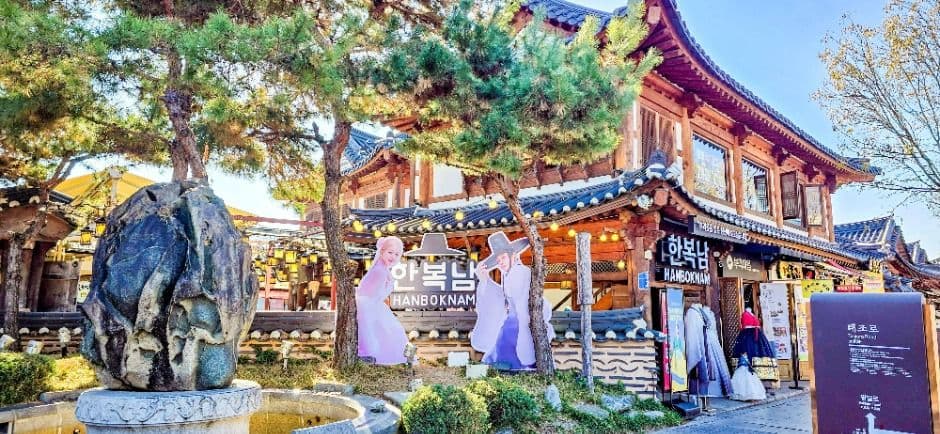
Korean Food Guide for Indian Travelers
한국의 맛을 찾아서: 인도 여행자를 위한 최고의 K-푸드 가이드

Photo by Pexels on Pexels
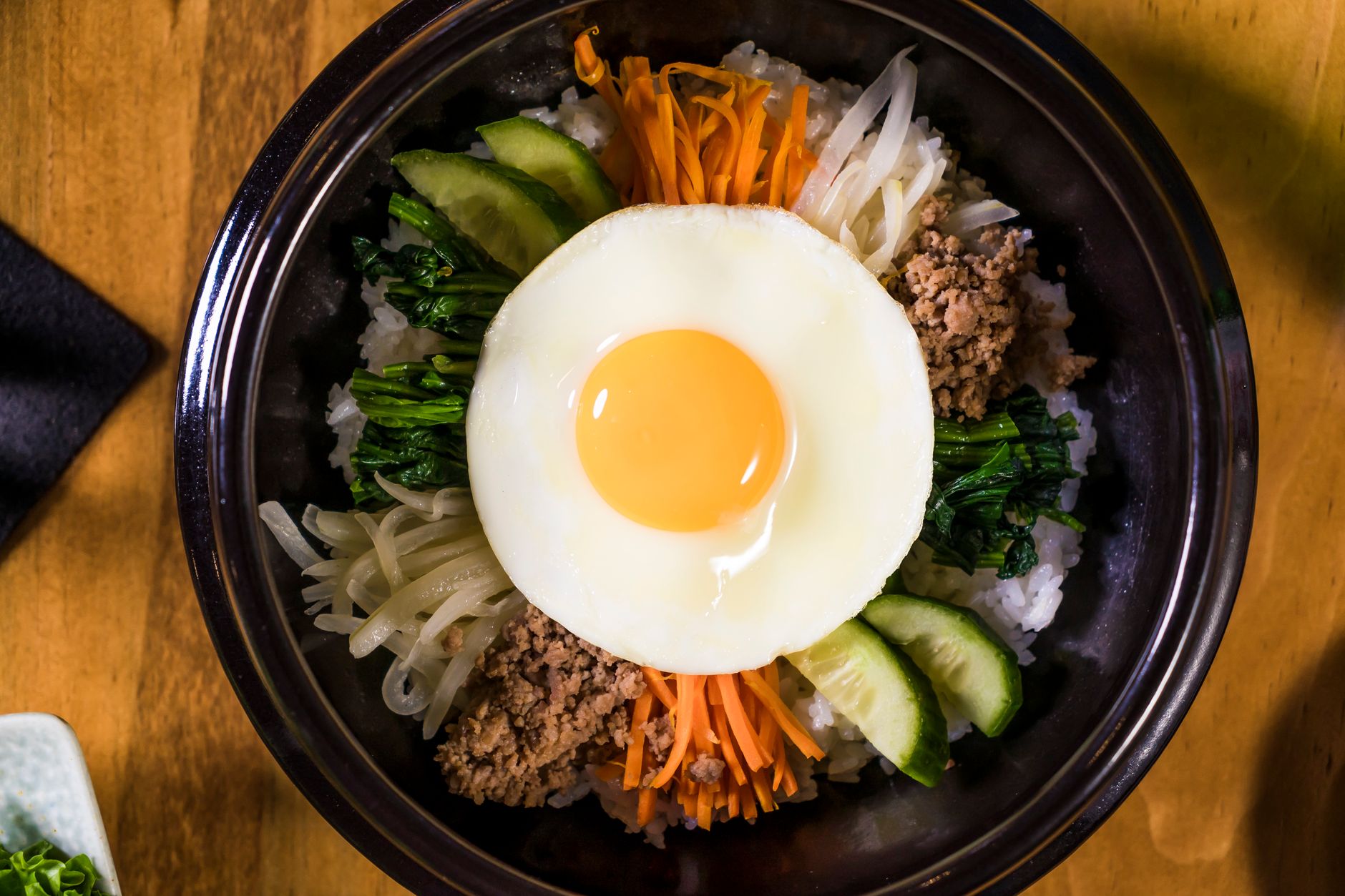
Bibimbap (비빔밥) – A Harmonious Symphony in a Stone Bowl
Hear the dramatic sizzle of a hot stone bowl as it arrives at your table, sending up wisps of toasted sesame-scented steam. This is Dolsot Bibimbap, one of South Korea's most iconic and visually stunning culinary exports. At its core, Bibimbap is a beautifully arranged bowl of warm white rice topped with an array of seasoned sautéed vegetables (namul), a dollop of sweet-and-spicy chili paste (gochujang), and often a fried egg. The magic happens when you mix everything together, allowing the residual heat of the stone bowl to create a delightfully crispy layer of rice at the very bottom.
For Indian travelers, Bibimbap feels wonderfully familiar yet excitingly novel—highly reminiscent of a vibrant, healthy vegetable pulao but elevated with a nutty, sesame-infused kick. It is one of the easiest dishes to customize for vegetarians. You can simply ask the chef for "gogi-eopsi" (without meat) and "gyeran-eopsi" (without egg) if you are vegan. To find the most authentic versions, head to the historic neighborhood of Insadong in Seoul or take a trip to Jeonju, the official birthplace of this glorious dish.
Patbingsu (팥빙수) – The Refreshing Savior of Korean Summer
Imagine soft, snow-like milk flakes melting on your tongue, instantly banishing the humid Korean summer heat. Patbingsu is Korea's beloved shaved ice dessert, traditionally piled high with sweet, slow-cooked red beans (pat), chewy little rice cakes (tteok), and a generous drizzle of condensed milk. Today, you can find modern variations (simply called Bingsu) loaded with fresh mangoes, strawberries, matcha, or even Oreo crumbs, making it a spectacular visual and sensory treat.
Indian dessert lovers will find an instant connection here; it is the ultimate cross between a creamy kulfi, a refreshing falooda, and a classic ice gola. Because it is completely vegetarian, it is an absolute safe haven for Indian families and student groups exploring Korea during the warm summer months. You can easily find dessert cafes like the famous national chain Sulbing in every major neighborhood of Seoul, Busan, and Jeju, offering giant bowls designed for sharing.

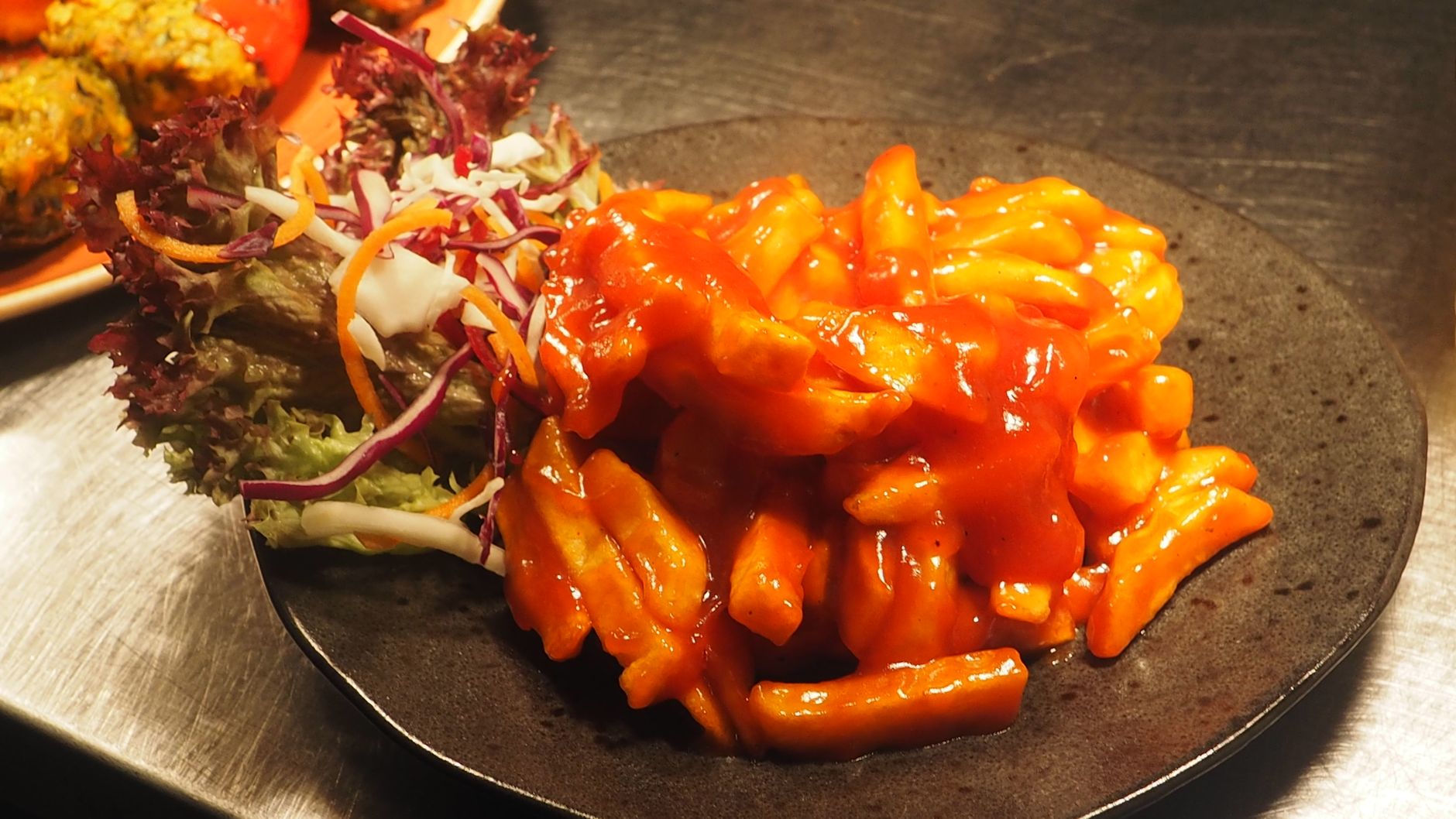
Tteokbokki (떡볶이) – The Fiery King of Korean Street Food
Walk past the bustling stalls of Seoul's traditional street markets and you are immediately drawn to the rich, bubbling crimson sauce of freshly made Tteokbokki. These cylindrical, chewy rice cakes are simmered in a sweet, savory, and fiery sauce made from gochujang (Korean chili paste) and gochugaru (chili flakes). It is the quintessential comfort food of Korean students, loved for its unique, gummy texture and its slow-burning, addictive heat.
If you love Indian street foods like spicy aloo chaat, chilli potatoes, or momos, Tteokbokki will quickly become your favorite snack. However, Indian vegetarians must exercise caution: traditional street-side Tteokbokki is almost always cooked in an anchovy-based broth and served with fish cakes (eomuk). To enjoy a 100% vegetarian or vegan version, look for modern, specialized vegetarian cafes in hip student districts like Hongdae or the historic alleys of Bukchon Hanok Village, where plant-based broths are proudly used.
Japchae (잡채) – Glossy, Sesame-Kissed Glass Noodles
Inhale the comforting, nutty aroma of toasted sesame oil and sweet soy sauce rising from a freshly tossed platter of glossy, translucent noodles. Japchae is a celebration dish made from sweet potato starch glass noodles (dangmyeon), stir-fried with thinly sliced carrots, spinach, mushrooms, and onions. The noodles have a delightfully springy, slippery texture that absorbs the delicate balance of sweet and savory seasonings perfectly.
Japchae is incredibly popular among Indian tour groups because of its mild, highly approachable flavor profile. Unlike many other Korean dishes, it is not spicy at all, making it a perfect option for children or those who prefer milder tastes. While it is traditionally garnished with beef, almost every restaurant can easily prepare "Yachae Japchae" (vegetable-only glass noodles) upon request. It is a staple at traditional Korean feasts and can be enjoyed at almost any Hanjeongsik (Korean full-course meal) restaurant.

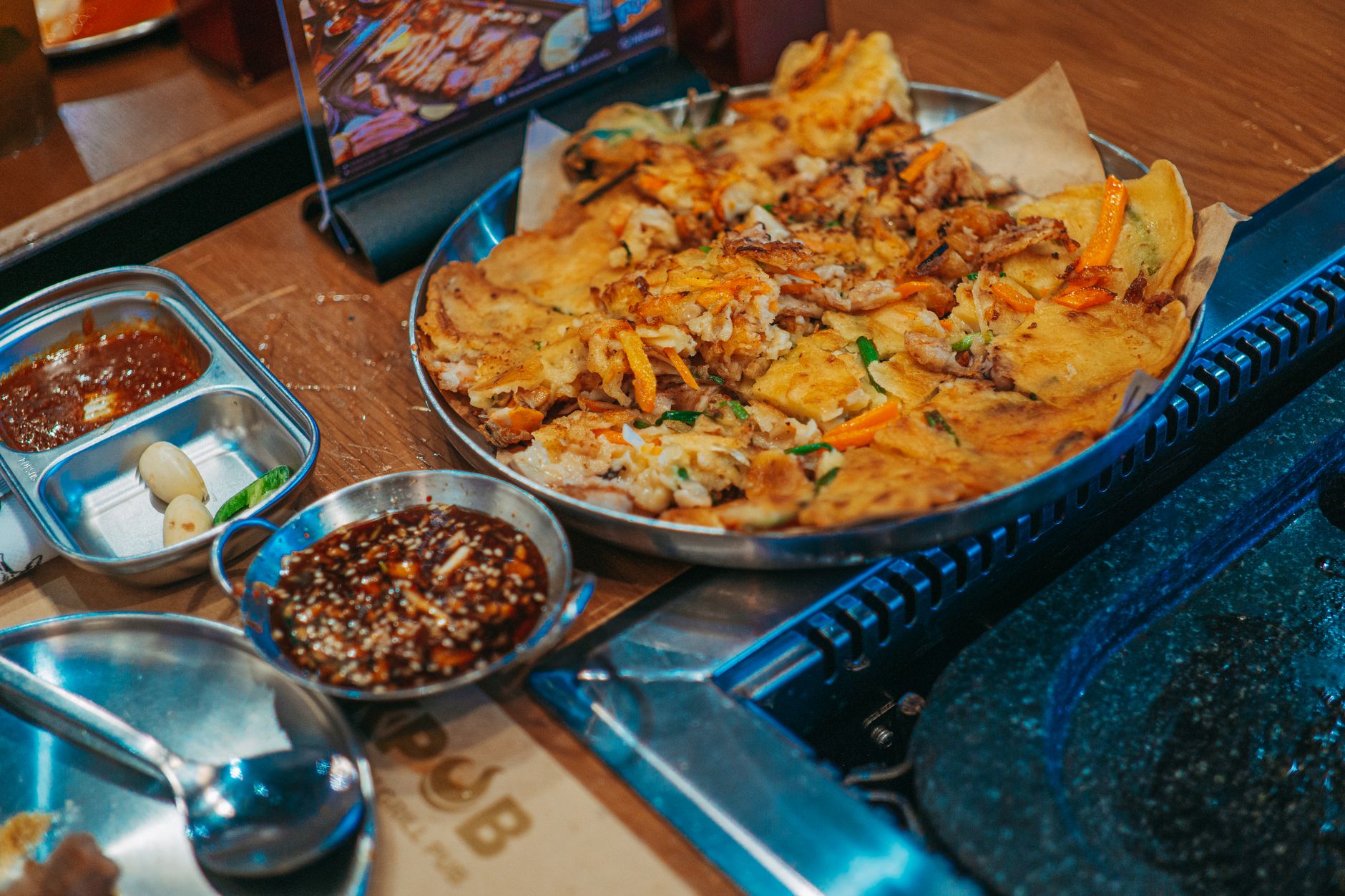
Jeon (전) – Sizzling, Crispy Savory Pancakes
Listen to the satisfying crunch as your chopsticks tear into a piping-hot, golden-brown pancake fresh off a sizzling griddle. Jeon represents a wide family of Korean savory pancakes made by mixing ingredients with a light flour batter and pan-frying them to crispy perfection. The most popular varieties include Kimchijeon (spicy, tangy kimchi pancake) and Pajeon (scallion pancake), often enjoyed alongside a bowl of sweet, milky rice wine (makgeolli) on rainy days.
For Indian travelers, Jeon is an instant comfort food because of its striking similarity to home-style chilla, puda, or savory uttapam. It is crispy, warm, and highly satisfying. Kimchijeon is naturally vegetarian (though you should double-check that the kimchi used does not contain fish sauce), while Yachaejeon (mixed vegetable pancake) is a completely safe, delicious, and savory option for vegetarian and Jain travelers alike. Dip it in the accompanying tangy, sesame-infused soy sauce for the ultimate flavor explosion.
Temple Food (사찰음식) – The Purest Jain-Friendly Culinary Art
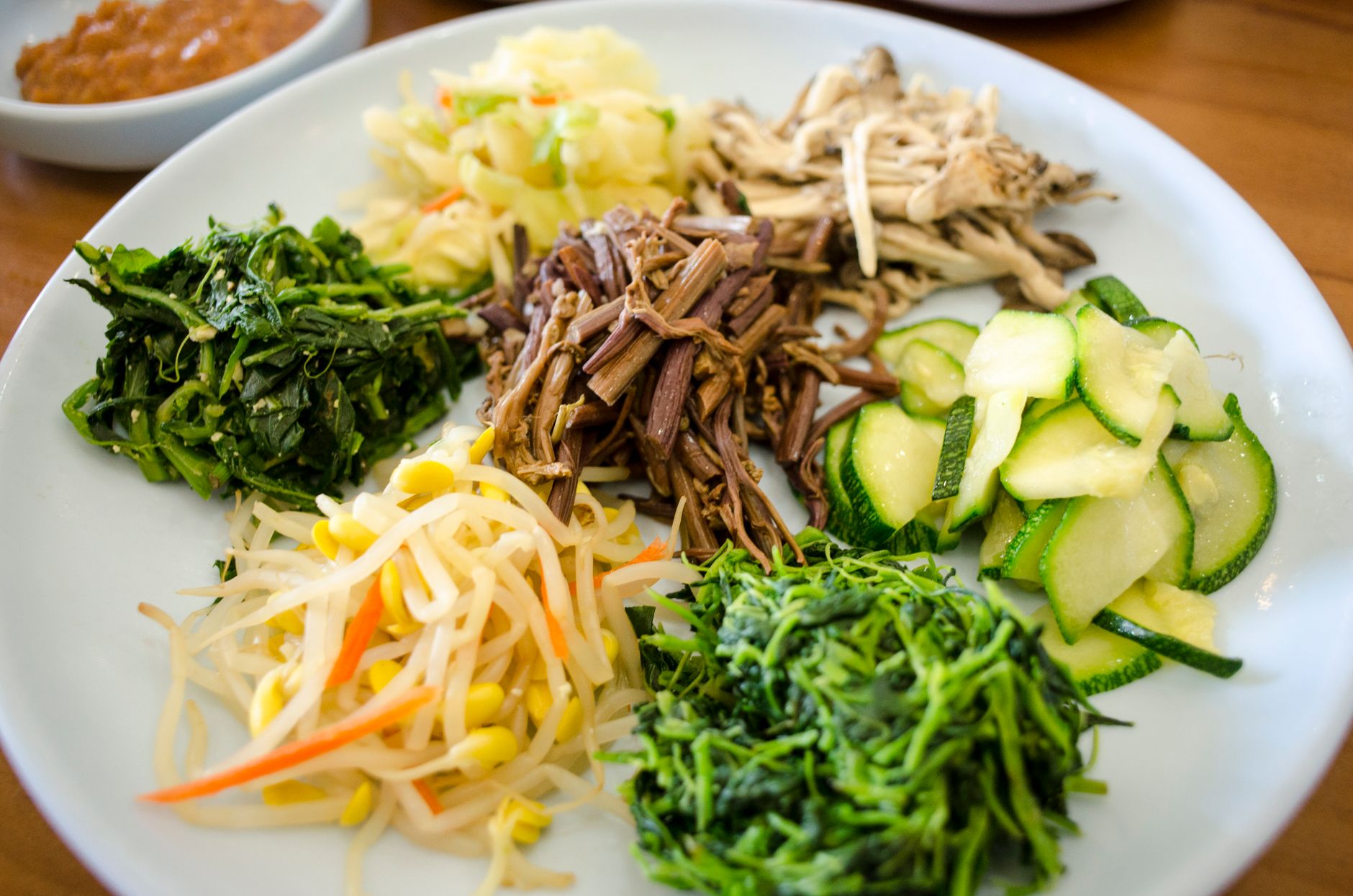
Step into a quiet, wood-scented temple dining hall where the gentle chime of a wind bell sets the stage for a meal of absolute purity. Korean Buddhist Temple Food (Sachal Eumsik) is a highly refined vegetarian cuisine prepared and consumed by monks as part of their spiritual practice. In strict accordance with Buddhist principles of non-violence and mental clarity, it completely excludes meat, fish, and crucially, the five pungent vegetables known as oshinchae (garlic, green onions, chives, wild chives, and leeks) which are believed to disturb meditation.
This ancient culinary tradition is an absolute dream come true for Indian Jain travelers, who often find it challenging to source onion- and garlic-free meals abroad. By replacing these heavy aromatics with natural flavor enhancers like mushroom powder, kelp, and perilla seeds, temple food offers a clean, complex, and incredibly nourishing dining experience. For the ultimate Michelin-starred temple food experience in Seoul, book a table at Balwoo Gongyang in Jongno-gu, which is run directly by the Jogye Order of Korean Buddhism.
Ready to embark on a culinary journey of a lifetime through South Korea? From the vibrant street food markets of Seoul to the peaceful, ancient temples of Gyeongju and the scenic coastlines of Jeju Island, we curate perfectly balanced itineraries featuring vegetarian, Jain, and halal-friendly dining options. Explore our Seoul, Gyeongju, and Jeju tour packages today and let us handle all your travel logistics while you savor the incredible tastes of Korea!
Planning a Korea School Trip?
This story is connected to one of our tour packages. Explore the full itinerary and pricing.
Share this article